For decades, every new flare‑up in West Asia (often called ‘the Middle East’ in European media) has sent a shiver through global energy markets. The latest renewed hostilities between the US and Iran around the Strait of Hormuz have led to new spikes in oil and gas prices. They are a reminder that much of our daily life still relies on fragile supply chains and geopolitics we do not control.
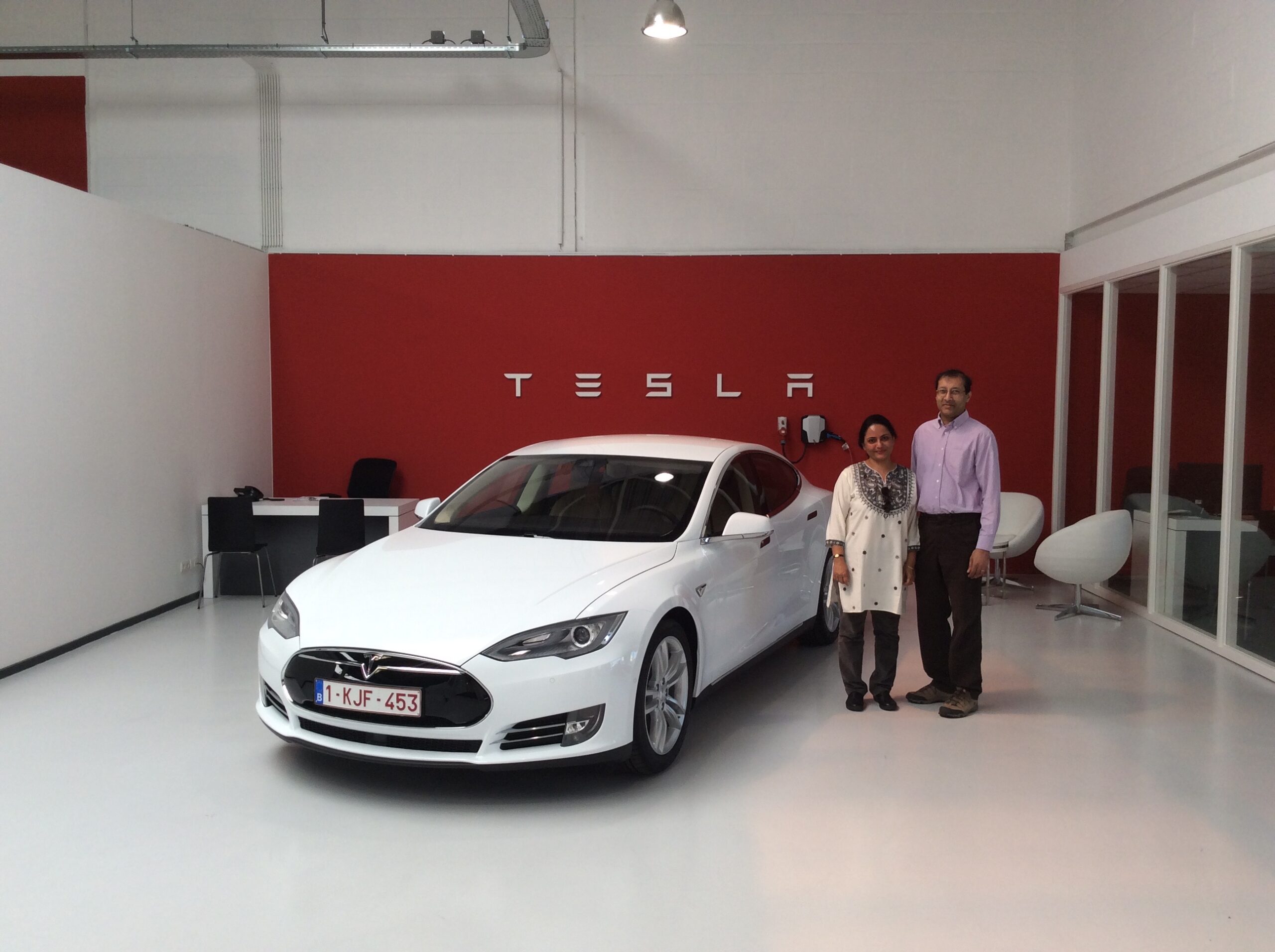
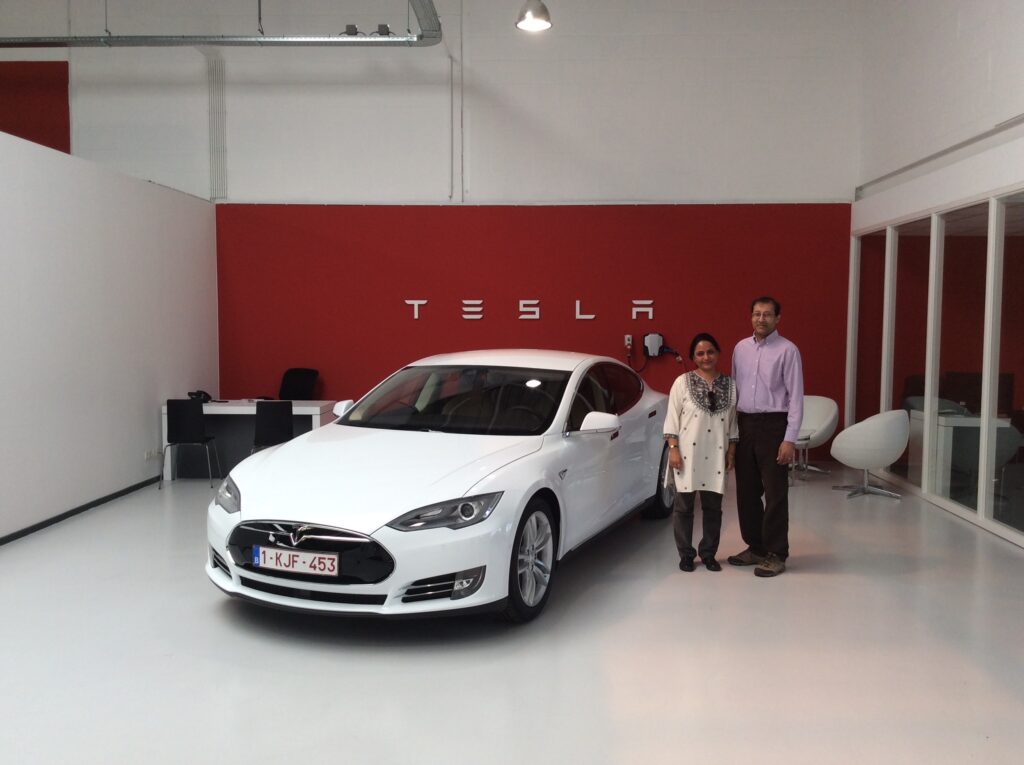
Our path away from that volatility and uncertainty started over 11 years ago, when we ordered a Tesla Model S, the only electric car at the time which had enough range (400km) and a charging network for our regular commute between Brussels and London. It was a stretch financially, we had never purchased such an expensive car before but it came with ‘unlimited free supercharging’ for the life of the car.
Long distance drives without needing petrol stations
One of the first things we noticed, particularly on our drive from Brussels to Cannes the day after taking delivery of the new car, was that the drive was much calmer and more enjoyable than our previous journeys along the same route. We were not having to go through busy service areas or petrol stations. Instead, Tesla’s navigation system had plotted a route for us taking into account charging stops when we would need them, reducing considerably the ‘range anxiety’ which critics of electric cars had been warning us about.
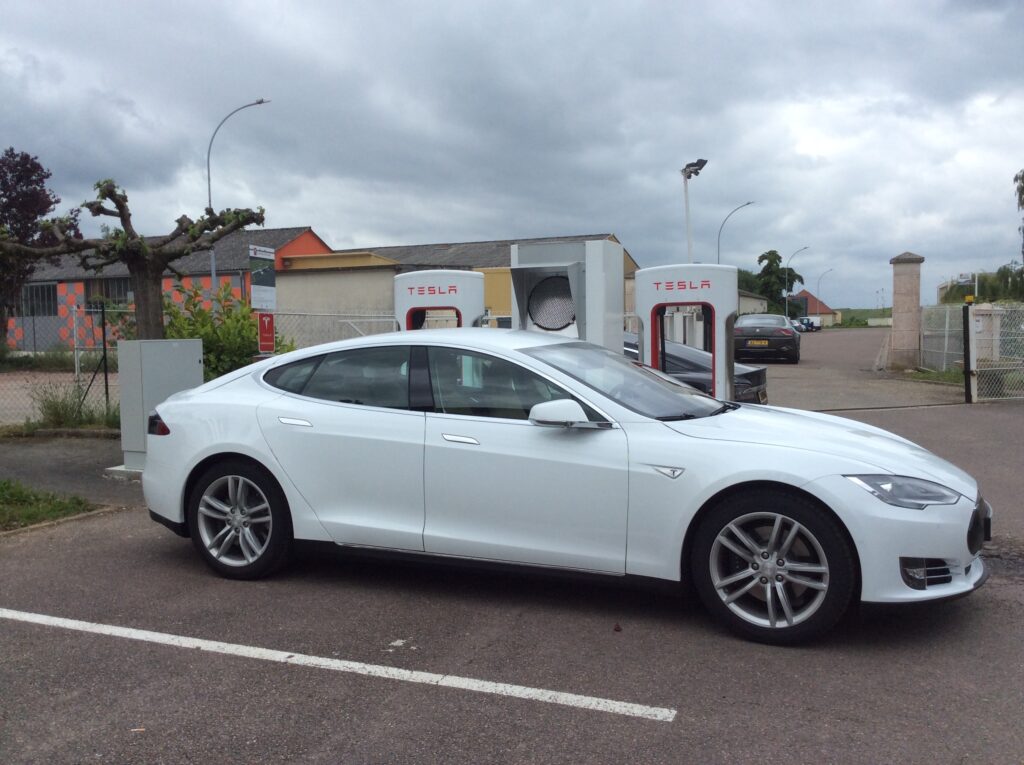
Pairs of ‘temporary’ Tesla superchargers (apparently Tesla had to wait for some months to secure planning permission to install permanent superchargers) had been installed in the parking areas of nice hotels slightly off the motorways, where we had the opportunity to have a break and/or something to eat while the car was charging enough to get to the next charging point. The charging stops matched our rhythm of taking a break from driving every 1.5-2 hours or so to stretch our legs and we were spending on nice food what we might otherwise have spent on petrol. Between the air suspension of the car and the charging stops, we started to enjoy the drive and the scenery around us.
Avoiding short-haul flights
This positive experience, as well as the ‘unlimited free supercharging’, led us to decide to avoid taking short-haul flights within Europe – a commitment we have been able to maintain ever since, apart from on two special occasions. We no longer needed to go through the stress of security checks and getting to airports ahead of time. We especially appreciated not contributing to the climate crisis – not only by using electricity rather than petrol or jet fuel but also because short-haul flights are one of the most carbon-intensive ways to travel per kilometre.
Short-haul flights (of under 700km) emit about 250g of carbon dioxide per passenger-kilometre, compared with about 195g for long-haul flights. The take-off and climb are the most fuel-intensive parts of a flight. On short-haul flights, that phase is a larger proportion of the total flight. See this study, for example.
Flights have other climate effects at high altitude too: leaving contrails behind and emitting nitrogen dioxide. So the total warming impact of flying can be 20%-50% higher than the carbon dioxide emissions alone.
Disconnecting from gas
A couple of years ago, we stopped using the ageing gas central heating boiler of our house in London after installing air-to-air heat pumps. We then realised that we hardly used gas at all for cooking but the standing charge costs were over £100 a year. So we replaced our gas hobs with an induction hob (as we had done at our apartment in Brussels) and disconnected the house from gas.
Not all cooking utensils work with induction hobs but we had also been replacing aluminium pans and non-stick pans with newer, stainless steel pans, all of which worked with induction hobs.
Energy resilience
With our house and car entirely dependent on electricity, our stay at an eco-home in Dartington encouraged us to think again about installing solar panels with a battery. We discovered that solar panels were much more efficient than when we had looked into solar panels some years ago and that the east side of the roof of our house was sunny for most of the day. Our solar panels and battery were installed last summer and became active in October, with our ability to export to the grid being approved in December.
Since then, our 14 solar panels have generated 3.7MWh, 3,47MWh has been generated this year. For the first time, our energy provider (Octopus) owes us money!
The battery we have installed, a Tesla Powerwall 3, is one of the few whose ‘gateway’ is designed to allow the house to remain operational if ever the grid supplying the house suffers a power failure. During the day, the house runs from the battery while all the solar power is exported to the grid. At night, the battery recharges on our overnight electricity tariff (7p/kWh instead of the daytime tariff of 30p/kWh).
During recent storms, the ‘Storm Watch’ feature of the Powerwall, which tracks local weather alerts, adapted this pattern to keep the battery charged to 100% during the day so that the battery could bridge any power cuts caused by the electrical storm.
Our electric car journey
The Tesla app encouraged us to give our car a name. So we gave our first Tesla Model S the name ‘The White Phantom’ as it was so quiet compared to petrol or diesel cars. That too lowered the stress of long drives.
By 2020, five years after we had bought The White Phantom, the range of a new Tesla Model S was 600km – 50% more than we had in 2015. I was still following the approach of replacing our car every five years, even though we had been very happy with The White Phantom, which had transformed our lives and our perception of Europe’s varied landscape. It was also the first year of the Covid-19 pandemic reaching Europe.
We had driven over 158,000km in The White Phantom by the time the lockdowns started in March 2020. At the time, the lockdown was not expected to last more than 2 weeks … . Even though we would lose the advantage of ‘unlimited free supercharging’, we decided to buy a new Tesla Model S, which had the longer range, HEPA filtration (the usefulness of which had been revealed by the Covid-19 pandemic), as well as the additional cameras and computing power to handle properly the ‘Autopilot’ feature which we had evolved impressively in The White Phantom through successive software updates.
The new car was delivered in August 2020, when the lockdowns were still in force. We called it ‘The White Knight’ as it allowed us to drive from Brussels to London without needing to charge in between, which, together with the HEPA filter and ‘bio-defence mode’, reassured us enough to make the journey once the international travel restrictions were lifted in December. We were not able to travel outside Belgium for the first few months and were only able to go beyond our Brussels-London commute from late 2021. That is why, almost six years later, The White Knight has only done around 110,900km, well below Tesla’s drive train warranty of the sooner of 8 years and 240,000km.
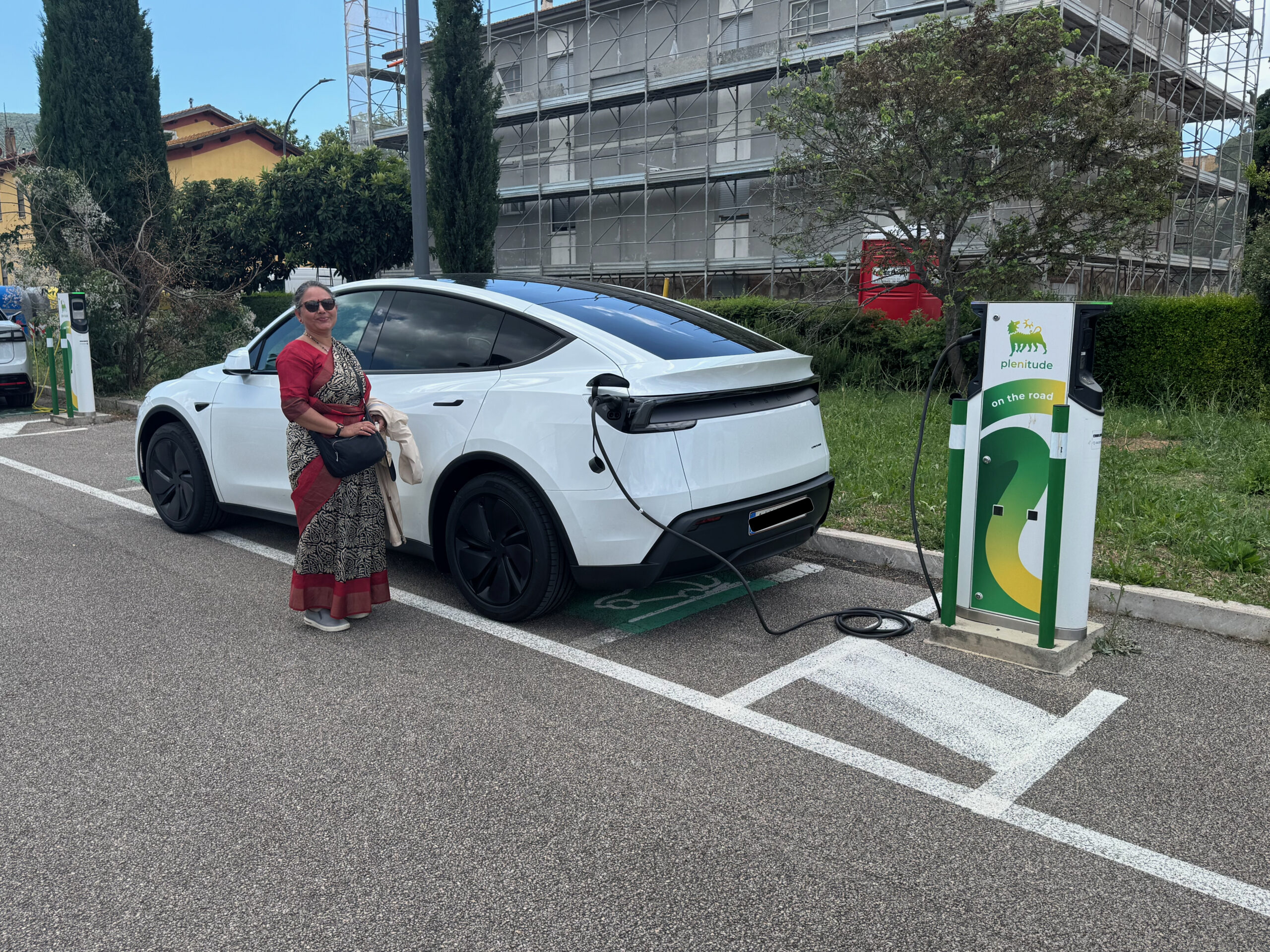
We sold The White Phantom through Nikola Brussels, which has specialised in sales of second-hand Tesla cars all over Europe for the past decade. As I mentioned in my previous post, we drove over 8,000km in our new Tesla Model Y last month. Nikola Brussels is currently handling the sale of The White Knight, which they have cleaned professionally to make it look as good as new.
If you know anyone who is interested in buying what is still a really comfortable long distance car with a realistic range of 560km on a full charge, here is the link to its Nikola Brussels listing.
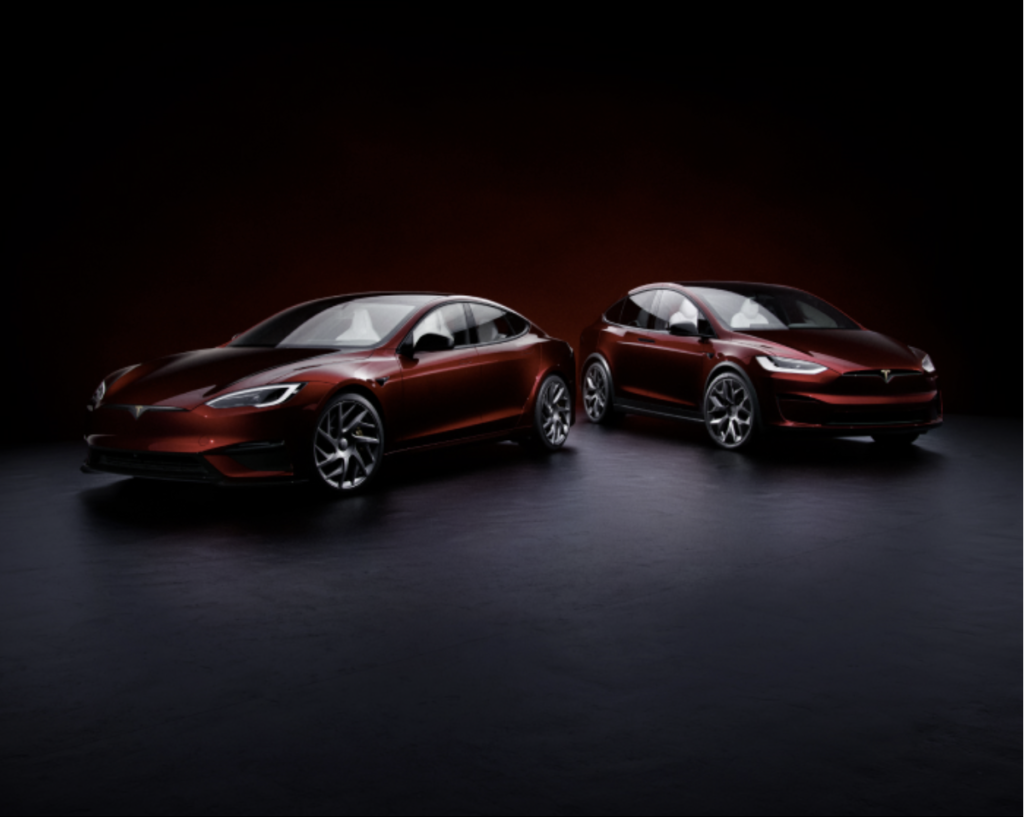
Sadly, Tesla stopped making the Model S and Model X last month. Last week, I received an e-mail from Tesla with the title ‘Thank you for helping to revolutionise the history of the automobile’. It was a timely reminder of how transformative the Tesla Model S was:
It all started with your Model S.
When you took delivery of your Model S, you helped revolutionise automotive history.
Model S proved that performance and practicality can coexist in a single vehicle. This advanced engineering can make your life as an owner easier. And this premium design made electric vehicles appealing for the first time.
Whether you’ve been with us from the beginning or just joined us, you’re part of this story.
Thank you for being part of the legendary Model S journey.