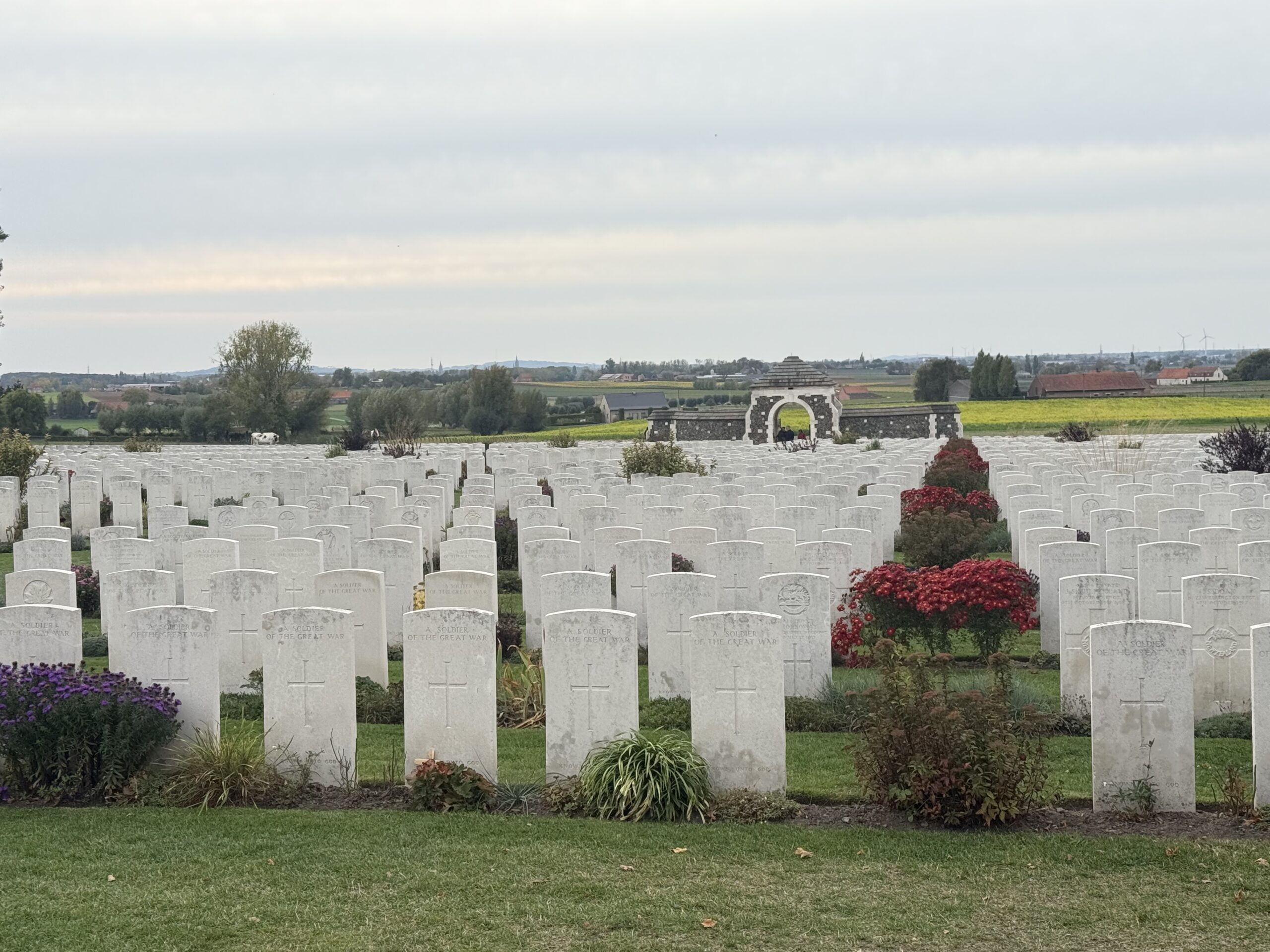
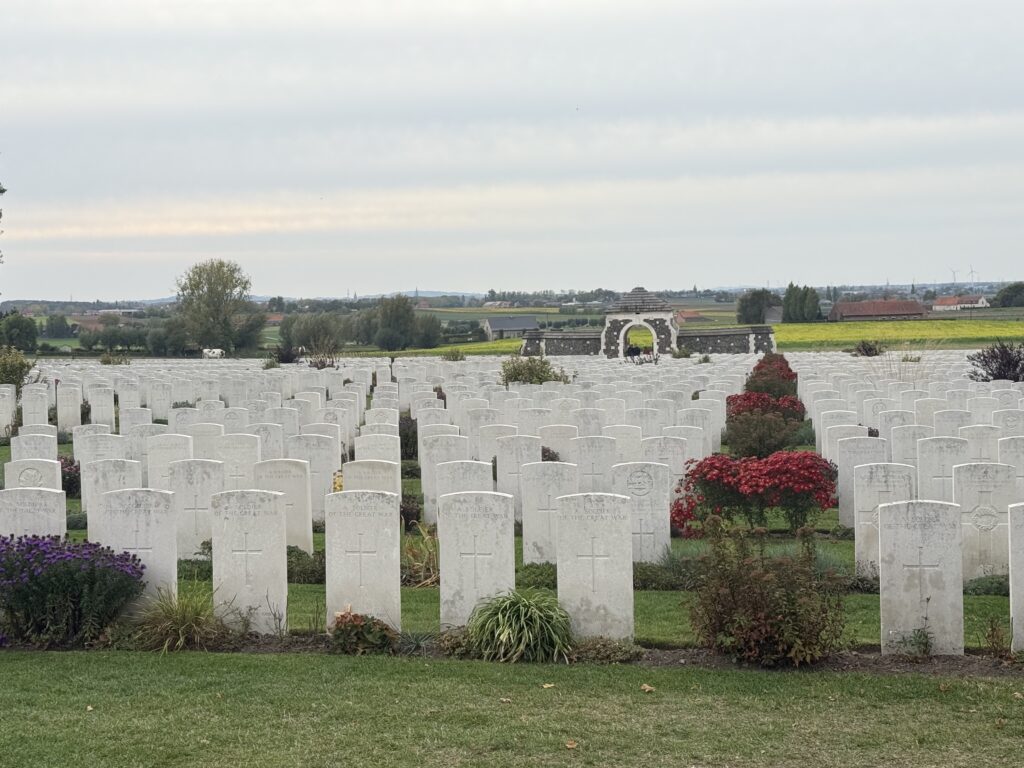
Last month, a friend who lives in Ieper (Ypres) kindly introduced us to the city and the Tyne Cot Cemetery, as well as other war cemeteries around Ieper. The Tyne Cot cemetery contains the graves of almost 12,000 First World War servicemen, more than 8,300 of whom remain unidentified. It is the largest Commonwealth War Graves Commission cemetery in the world.
Most of those buried there died during the Battle of Passchendaele in 1917. The Tyne Cot Memorial, around the Eastern boundary of the cemetery, is engraved with the names of another 35,000 UK and New Zealand servicemen. Nearly all of them died between August 1917 and November 1918, and have no known grave.
Of the 205,000 British Empire servicemen of the First World War commemorated in Belgium by the Commonweatlh War Graves Commission, almost half have no known grave. Either their bodies were never found or they could not be identified.
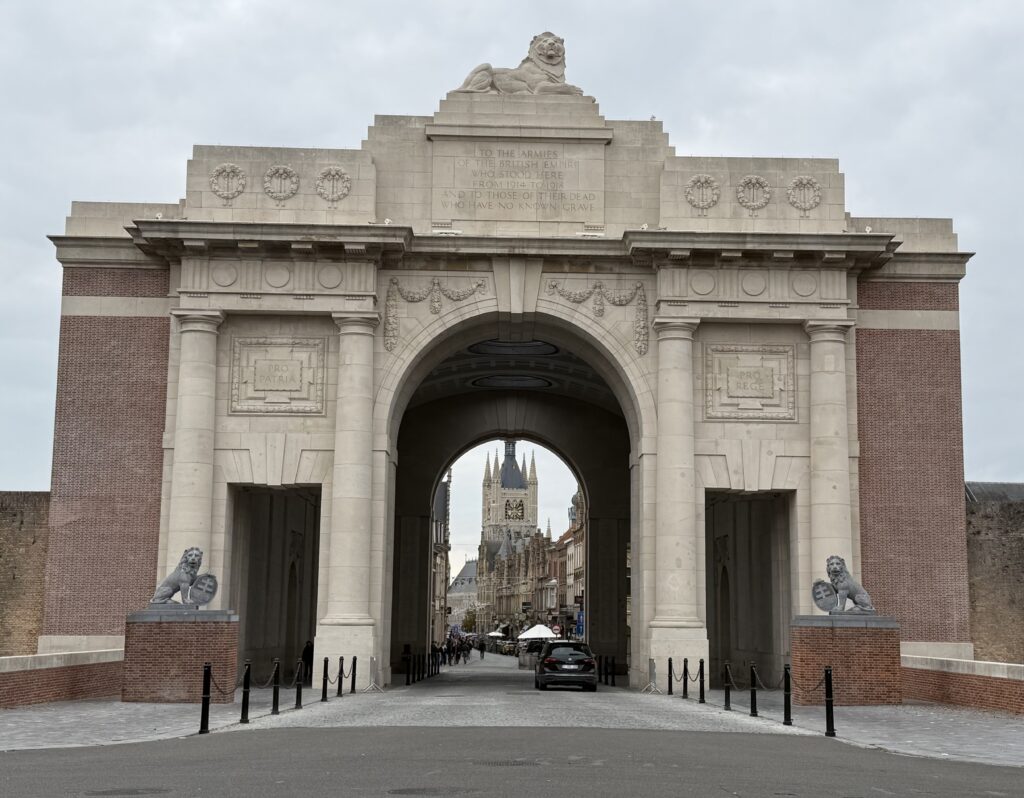
The Menin Gate in Ypres commemorates over 54,000 Commonwealth soldiers who died in the Ypres Salient before August 16, 1917, and have no known grave. Their names are carved into the memorial’s walls, and the gate stands at the location through which hundreds of thousands of Allied soldiers marched on their way to the front lines, many never to return.
Shortly before our visit, a memorial to the Indian soldiers who died there was inaugurated close to the Menin Gate.
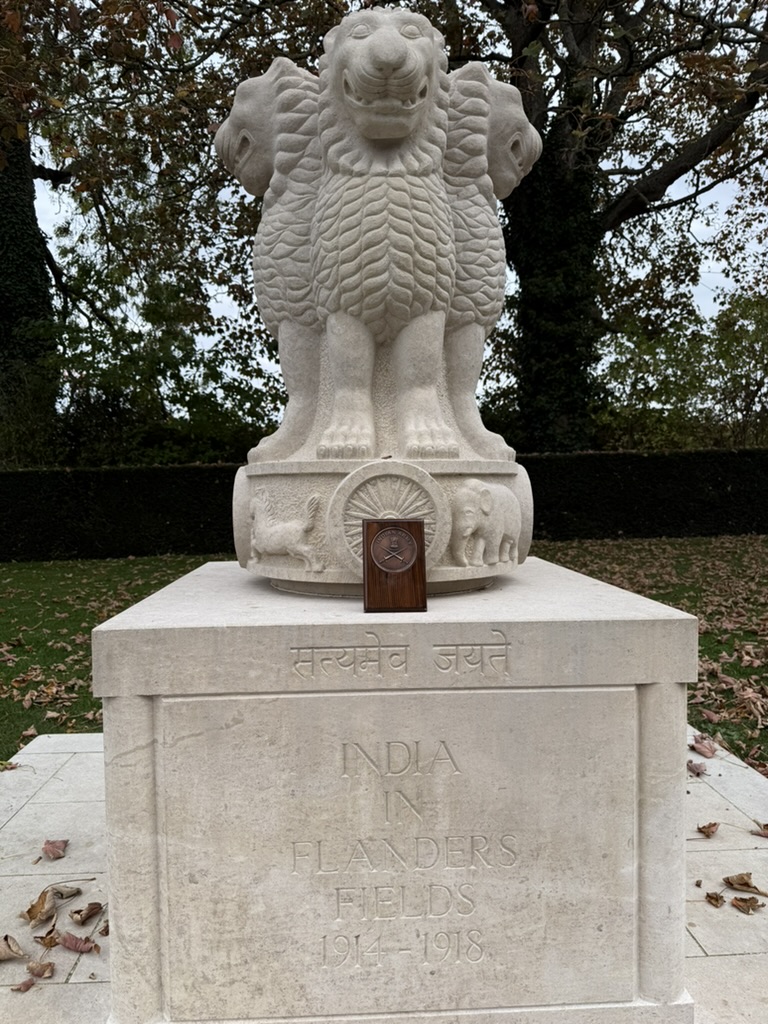
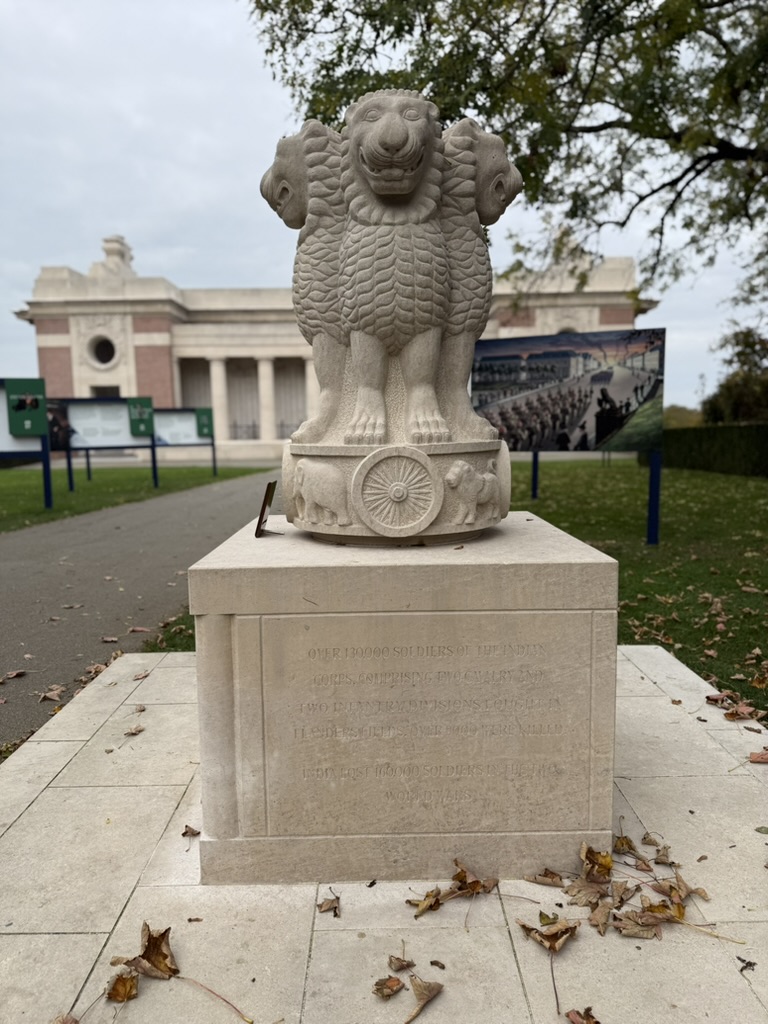
As noted on one of the panels next to the memorial:
Some of the best soldiers available to the British Empire at the outbreak of the [First World War] were the men of the British Indian Army. Indian soldiers arrived in Europe just weeks after the outbreak of war. They fought tenaciously to hold the line at Ypres in 1914 and 1915.
Every evening at 8pm, the Last Post ceremony takes place under the arch of the Menin Gate. The ceremony was established in 1928, one year after the Menin Gate Memorial was unveiled, as an expression of gratitude by the citizens of Ieper toward those who had given their lives for Belgium’s freedom. The idea originated with Pierre Vandenbraambussche, the Superintendent of Ieper Police, who proposed the daily sounding of the Last Post – the traditional military bugle call signifying the end of the day’s duties – as a tribute to fallen soldiers.
The ceremony has been interrupted only once in its history: during the German occupation of Belgium from May 20, 1940, to September 6, 1944, when it was performed instead at Brookwood Military Cemetery in England. The ceremony resumed at the Menin Gate on the same evening that Polish forces liberated Ieper in 1944, even though heavy fighting was still taking place elsewhere in the town.
Although the Last Post ceremony at the Menin Gate is specifically dedicated to British and Commonwealth soldiers who died in the Ieper Salient during the First World War, it has become a universal symbol of remembrance, attended by visitors from around the world who come to honour not just those 54,000 named on the memorial, but all who have fallen in war.
Our visit to Ieper had a much more profound impact on us than watching the televised Remembrance Day ceremony at the Cenotaph in London. Several of the gravestones we saw at the Tyne Cot cemetery were for men who had died at the age of 19, 20 or 21.
Armistice Day has been marked by most European countries on 11 November since 1919 to commemorate the end of hostilities in World War I. In the UK, it has evolved into Remembrance Sunday, on the second Sunday of November. Over the years, the scope of remembrance has expanded to honour all those who died or were injured in subsequent conflicts.
In the immediate aftermath of World War I, Armistice Day ceremonies emphasised the futility and horror of war. The original meaning centred on a commitment to peace and the conviction that such carnage must never be repeated. The phrase “never again” was central to early commemorations, with ceremonies explicitly promoting the message that war should be avoided at all costs.
The Battle of Passchendaele, commemorated at the Menin Gate, came to symbolise the worst horrors of the First World War, due to the sheer futility of much of the fighting, with thousands of Canadian casualties for ground that would be given up a year later. Early remembrance explicitly acknowledged this senselessness.
Somehow, in spite of all these remembrance ceremonies, the world is experiencing unprecedented levels of armed conflict. 2024 saw the highest number of state-based armed conflicts (61) in over seven decades, with approximately 129,000 battle-related deaths, and conflict levels are expected to continue rising by 15-20% in 2025. One in eight people globally is now affected by conflict, and roughly 2 billion people – a quarter of humanity – live in conflict-affected countries.
There appears to be a consistent pattern of world leaders gather to honour the war dead while continuing or enabling conflicts. It would seem that the annual remembrance ceremonies have become performative rituals – political spectacles that are designed for media consumption and nationalist sentiment rather than genuine reflection on the futility of war.
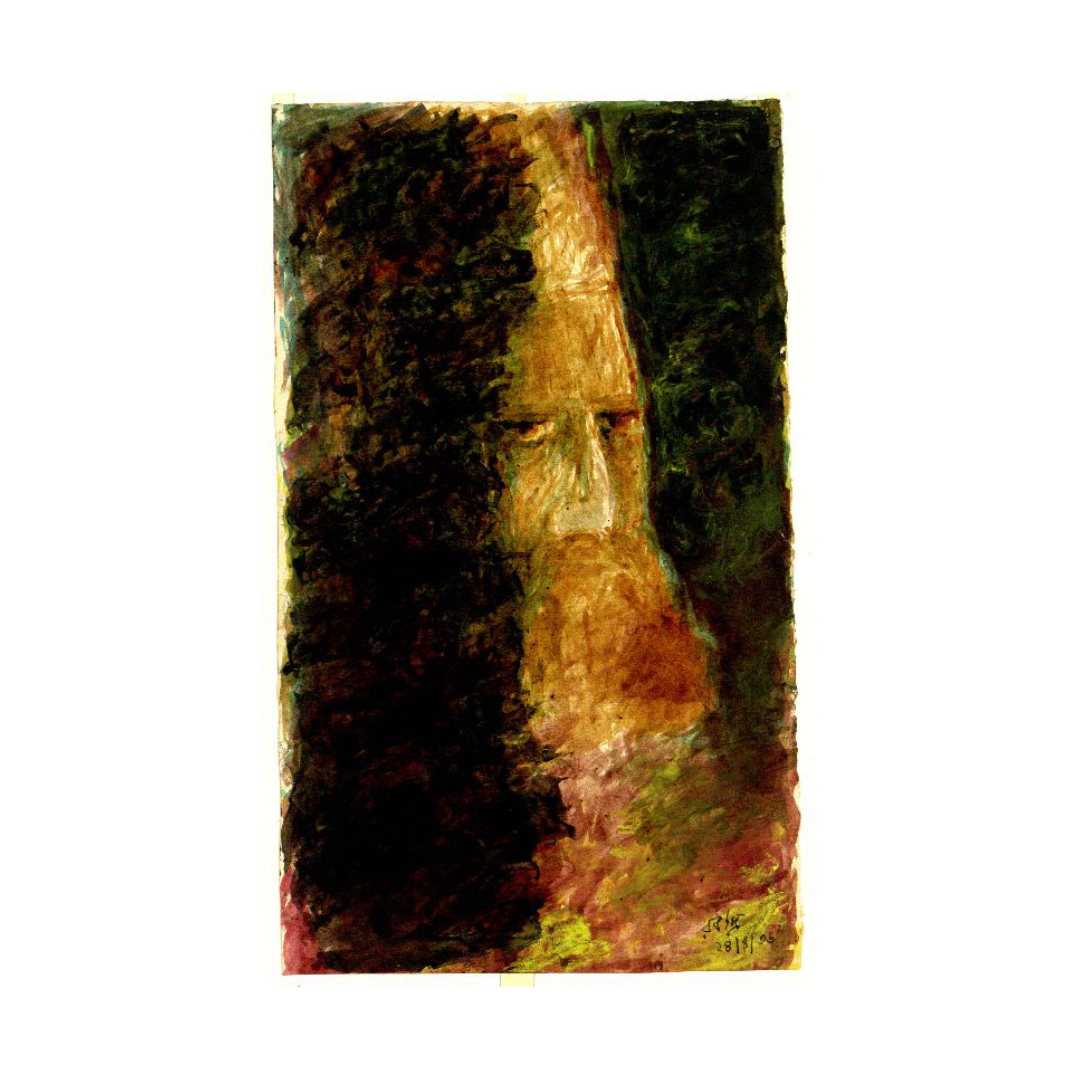
Rabindranath Tagore: Against nationalism and war
Rabindranath Tagore lived through two World Wars, the Partition of Bengali in 1905 and the rise of aggressive nationalism across the globe. His response was a passionate, sustained critique of war, nationalism and the materialism that fuelled both.
In an article published in The New York Times in 1916, he wrote:
The war, to my mind, is the outcome of overgrown materialism, of an ideal based on self-interest and not based on harmony. There are differences between capital and labour because both are working in the interest of their own selves—peace is but temporary, and other clashes are bound to come.
Years later, in 1937, he wrote the poem ‘Perpetual travellers’ (চিরযাত্রী) about the futility of empire-building:
Since the first day-break of human age misted with myths,
Out they came in countless hosts, searchers and pilgrims,
From the great lion-gates of olden epochs.
The fretwork of their portals, cut in unknown signs,
Still flickers in broken language upon the age-dimmed stones.They are wanderers, warriors,
Their journey eternally stretches onward into ages yet unborn.
The war is never ended,
The drums of time thunder ceaselessly.
Under the footfalls of millions across centuries,
The earth has trembled—
At midnight throbs the anxious breast,
The heart grows weary,
Wealth becomes trivial,
Death becomes beloved.Those whose marrow burned with pride,
Who marched upon the path,
Having crossed over death, even now they march on;
Those who clung to the homestead
Live a dead life,
Their silent settlements
Lie upon mute sandbanks of the voiceless ocean.
Within their world-wide ghostlands
In impure air,
Who will raise homes?
Who will gaze with upturned brows?
Who will accumulate rubbish?[English translation by Rabindranath Tagore]
William Shakespeare: Unveiling war’s brutal realities
Shakespeare lived in an era when military valour was celebrated and monarchy was sacrosanct. Even so, according to Robert White’s Shakespeare Against War: Pacifist Readings, Shakespeare’s works consistently challenge appeals to heroism and revenge and reveal the brutal futility of war.
His play Troilus and Cressida, set during the Trojan War, presents war as absurd, pointless, and morally corrupting. Both Greek and Trojan leaders are presented as vain, foolish, and morally bankrupt. The Greek slave Thersites rails against “the stupidity of war and conflict,” while the narrative structure reveals how love, honour and loyalty all collapse under the corrupting influence of warfare.
The war-rallying speeches of Henry V (such as his speech beginning ‘Once more unto the breach’ and the St Crispin’s Day speech) are among the most famous in English literature. However, the dramatic context systematically undercuts the King’s rhetoric. As John Gittings has noted,
The adjectives which Shakespeare uses to categorise war are almost always negative and pejorative. War is “all-abhorred” (Henry IV) and “cruel” (Troilus and Coriolanus,) it is “none-sparing” (All’s Well) and “mortal-staring” (Richard III,) it is “dreadful” (Henry VI,) “fierce and bloody” (King John,) “mad-brained” (Timon) and “hungry” for men’s blood (Richard III); it is a “hideous god” which has a “harsh and boist’rous tongue” (Henry IV).’
Philippa Jane Winkler provides a more detailed analysis of the anti-war message of Henry V here.
The Hauntings
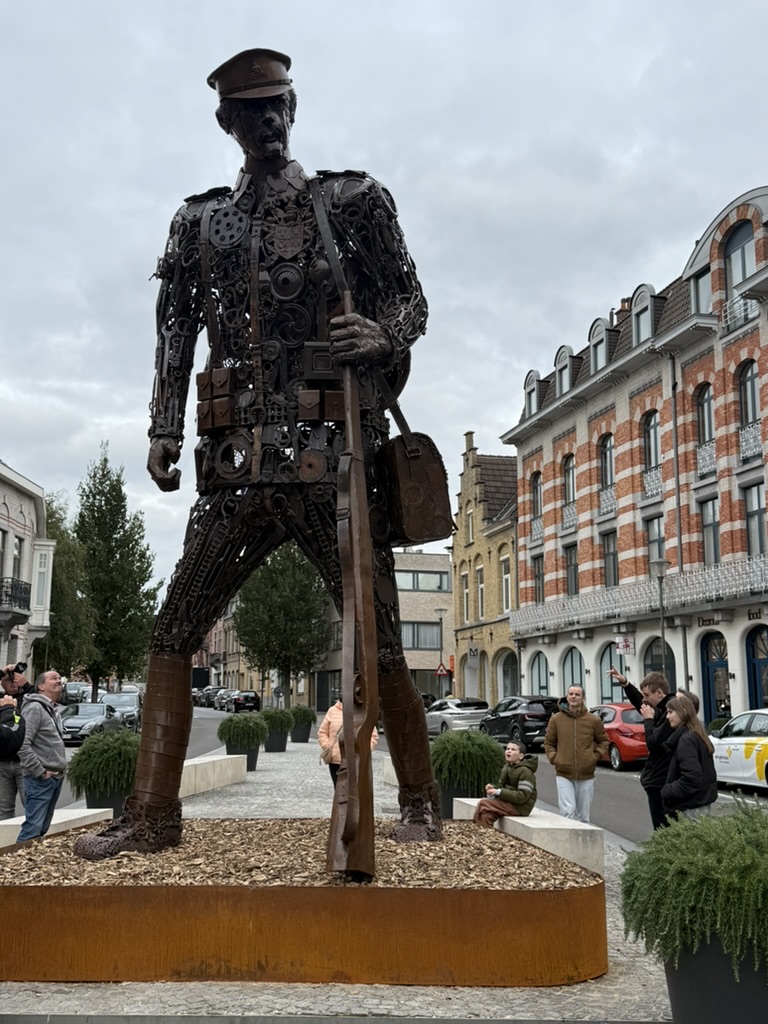
Not far from the Menin Gate, we saw this metal sculpture by Jo Oliver called The Hauntings. It was inspired by the spirit of a young First World War soldier said to wander the hills near her home in Somerset, England. The sculpture is formed from discarded metal, allowing light to shine through and giving him a haunting, mystical presence. As a panel next to the sculpture explains:
He symbolises the “common man” affected by war – not tied to any nation, belief or ideology.
His presence honours all who have suffered and persevered through conflict. After appearances in the UK and Ireland, his journey now brings him to Ypres – a place sacred to remembrance.
His story reminds us of loss, hope, and the resilience of the human spirit. Those who encounter him often feel a deep connection, as if he carries the memory of many. Jo sees him not just as a sculpture, but as a messenger – silently urging us to reflect, remember, and choose peace.
Over a century ago, Tagore had identified the root causes of war as being the aggressive materialism of modern society, belligerent nationalism, and institutionalised religion. Looking around the world today, we see many countries where at least one or even all of these forces are on the rise.
Perhaps if world leaders were to attend the moving Last Post Ceremony in Ieper, they might be reminded of what more elaborate annual remembrance ceremonies may disguise: the futility of war.